
Land Management · Insights
How Brush Clearing Helps Reduce Ticks Around Your NC Home and Pasture
Clearing brush and keeping grass short is one of the most effective ways to reduce ticks around your home, because it removes the shady, humid habitat ticks need to survive. Landscape changes will not eliminate ticks on their own, but they shrink the areas where you, your kids, pets and livestock are most likely to pick them up.
This guide explains where ticks live on a typical Asheboro, Randolph County or Piedmont property, how brush clearing and mowing create a safer buffer, a seasonal maintenance plan, and estimated cost ranges. It is about habitat, not pesticides. For chemical treatment or health questions, follow guidance from NC State Extension, the NC Department of Health and Human Services and your doctor or veterinarian.
Where Ticks Live on a Rural or Wooded Property
Ticks live mostly in the transition zones where lawn meets woods: leaf litter, tall grass, brushy edges, stone walls and overgrown fence lines. These areas stay shaded and humid, which ticks need to avoid drying out, and they hold the mice, deer and other animals ticks feed on.
In the NC Piedmont, the lone star tick, American dog tick and blacklegged tick are all common. Public health agencies consistently point to the same landscape advice: keep grass short, remove leaf litter and brush, and create a clear barrier between wooded areas and the places people use.
How Brush Clearing Reduces Tick Habitat
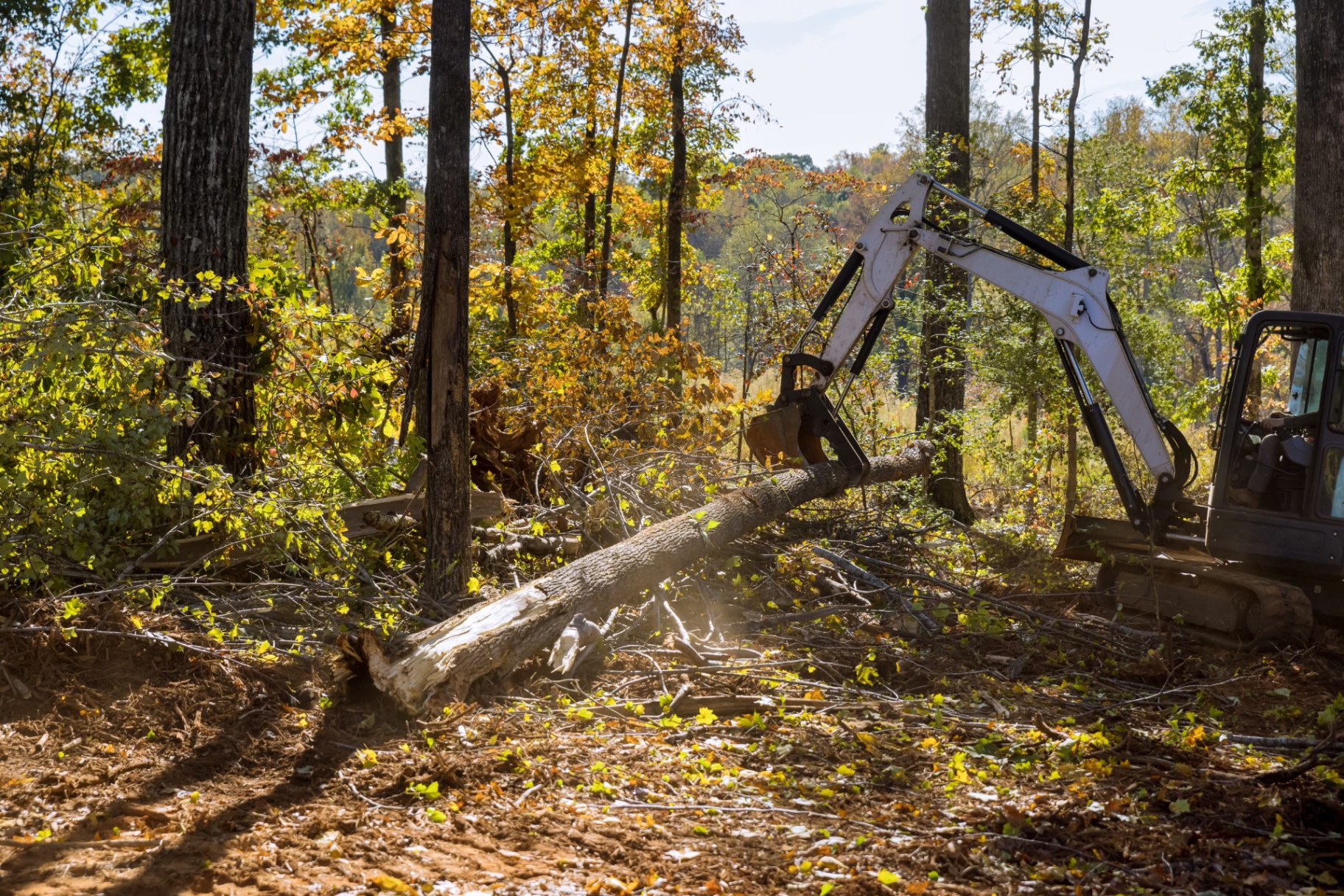
Brush clearing reduces tick habitat by opening the ground to sun and air, which dries it out, and by removing cover for the small animals that carry ticks. The result is fewer ticks in the areas you actually use.
Forestry mulching is well suited to this because it grinds thick understory without hauling, and the mulch layer can be managed as part of the buffer. Our land clearing and brush removal service is the usual starting point for heavily overgrown edges.
- Removes shade and humidity at ground level.
- Takes away cover for mice and other hosts.
- Opens sight lines so deer trails near the house are easier to manage.
- Makes regular mowing possible on ground that was too thick to mow.
Creating a Tick Buffer Zone Around Your Home
A tick buffer zone is a cleared, regularly mowed strip between wooded or brushy areas and your lawn, play areas and outbuildings. Health agencies often recommend a barrier of wood chips or gravel at least a few feet wide at the woods edge, with short grass beyond it.
On larger properties we often suggest a wider cleared band, commonly ten to thirty feet depending on the layout, cleared of brush and maintained by mowing. That band also doubles as a firebreak and makes the edge of your property easier to watch.
- Zone 1: lawn and play areas, mowed short all season.
- Zone 2: a cleared band at the woods edge, kept low with mowing or bush hogging.
- Zone 3: wooded areas beyond, with understory thinned where you walk or hunt.
Pastures, Fence Lines and Livestock
Overgrown pasture edges and fence lines are some of the worst tick areas on a farm, because animals graze and rest right against them. Clearing fence lines and keeping pastures mowed reduces the brushy cover where ticks wait for a host.
A regular bush hogging schedule keeps tall grass and briars down across the pasture. For heavily grown-up fence rows, a mulching pass first, then annual mowing, is usually the most cost-effective approach. Talk with your veterinarian about any tick treatment for the animals themselves.
Estimated Cost Ranges for Tick Habitat Clearing
Tick habitat clearing is priced like any brush removal or mowing job, based on density, acreage, terrain and access. These are typical 2026 ranges in the NC Piedmont.
These figures are typical estimated ranges for the NC Piedmont and Southern Virginia in 2026, not quotes. Every property is different, and the written proposal KNS LandWorx gives you after an on-site walk is the only price that applies to your job.
- Buffer strip around a home on a small lot: often a few hundred dollars up to roughly $1,500.
- Mulching overgrown edges and understory: roughly $1,500 to $3,500 per acre.
- Fence line clearing: commonly priced per linear foot or by the job, depending on growth.
- Ongoing mowing or bush hogging: roughly $60 to $150 per acre for maintenance passes.
- Mobilization from our Rural Hall, NC yard is added based on distance.
A Seasonal Maintenance Plan
Clearing is a one-time reset; maintenance is what keeps tick habitat from returning. A simple plan works on most properties.
- Late winter: clear or mulch brushy edges before spring growth.
- Spring through summer: mow lawns and buffer strips regularly.
- Late summer: bush hog pastures and field edges before growth gets woody.
- Fall: remove heavy leaf litter from buffer zones near the house.
- Every few years: a light mulching pass on wooded understory you walk through.
What Clearing Can and Cannot Do for Ticks
Brush clearing reduces tick habitat, but it is honest to say what it does not do. It does not eliminate ticks from a property, because ticks arrive on deer, mice, birds and other wildlife that will keep crossing your land no matter how clean the edges are. What clearing does is remove the shaded, humid cover ticks need to survive between hosts, so far fewer of them live where your family actually spends time.
Think of it as stacking the odds. A cleared buffer, a mowed lawn, dry sunny edges and managed leaf litter make the areas closest to the house hostile to ticks, and that is where most bites happen. Combine that habitat work with repellent, tick checks after time outdoors and, if your vet recommends it, treatment for pets, and you have a practical layered defense. Clearing is the foundation of that plan, not the whole plan, and any company that promises a tick-free property from equipment alone is overpromising.
Common Mistakes When Clearing for Ticks
The most common mistake is expecting clearing alone to solve the problem. Landscape work reduces habitat; personal protection and, where appropriate, professional treatment are still part of the picture.
- Clearing once and never mowing again.
- Leaving brush piles near the house, which shelter mice.
- Clearing the lawn but ignoring fence lines and trail edges.
- Removing the woods edge entirely when a managed buffer would do.
- Skipping tick checks after yard work.
Frequently Asked Questions
Does clearing brush really reduce ticks?
Yes. Public health guidance recommends removing brush and leaf litter and keeping grass short, because it removes the humid, shaded habitat ticks need. It reduces risk but does not eliminate ticks.
How wide should a tick buffer zone be?
Health agencies often recommend at least a few feet of wood chips or gravel at the woods edge. On larger properties, a mowed band of roughly ten to thirty feet is common.
Is forestry mulching good for tick control?
It is a practical way to clear thick understory without hauling. Keep the cleared area mowed afterward so brush and tall grass do not return.
Does KNS LandWorx spray for ticks?
No. We handle clearing and mowing. For chemical treatment, follow NC State Extension guidance or hire a licensed pest control provider.
What does tick habitat clearing cost?
Estimated 2026 ranges run from a few hundred dollars for a small buffer to roughly $1,500 to $3,500 per acre for mulching overgrown edges. Your written proposal is the price that applies.
Do you serve Asheboro and Randolph County?
Yes. KNS LandWorx serves Asheboro and surrounding Randolph County communities from Rural Hall, NC.
Open up the edges where ticks hide
Tell us where your family, pets or livestock spend time and where the woods and brush crowd in. KNS LandWorx will walk the property, lay out a practical buffer zone and give you a written proposal for clearing plus an optional mowing schedule to keep it open.
Keep Reading
Building Pad Grading Cost for Homes, Shops and Barns in North Carolina
Planning a house, shop or barn? Here is how building pad grading is priced in NC, with estimated ranges, a worked example and the mistakes that cause settling.
Read guide Land ManagementBush Hogging Cost Per Acre in North Carolina: 2026 Estimated Ranges
Pasture, hunting land or an overgrown field? A practical look at how bush hogging is priced per acre, what raises the cost and how to keep it low year after year.
Read guide Land ClearingBrush Removal Cost in Greensboro, NC: What Drives the Price in 2026
Overgrown back lot, fence line or wooded edge? Here is how brush removal is actually priced in Greensboro, with honest ranges and the factors that change them.
Read guideGet a Free Insights follow-up (Land Management) Quote
Step 1 of 2: tell us how to reach you and what service you need. We'll follow up with honest guidance and a written quote.
Ready to reclaim your property?
Free, no-pressure quotes across the NC Piedmont Triad. Call today.