
Forestry Mulching · Insights
Trail Cutting Cost in NC: How to Build Walking, ATV and UTV Trails Through Your Woods
Trail cutting cost in North Carolina typically runs about $1 to $5 per linear foot for a mulched walking or ATV trail, depending on width, vegetation density and terrain. A half mile trail through average Piedmont woods often lands somewhere around $3,000 to $9,000 in estimated 2026 pricing. Light brush trails sit at the low end; thick hardwood, steep slopes and creek crossings sit at the high end.
This guide is for rural landowners in Stokes, Surry, Forsyth, Yadkin, Rockingham and nearby counties who want walking paths, ATV or UTV loops, or simple access lanes through their woods. It covers how trails are cut, how to choose a width, a worked cost example, layout tips that prevent erosion, and the mistakes that turn new trails into muddy ruts.
What Is Trail Cutting?
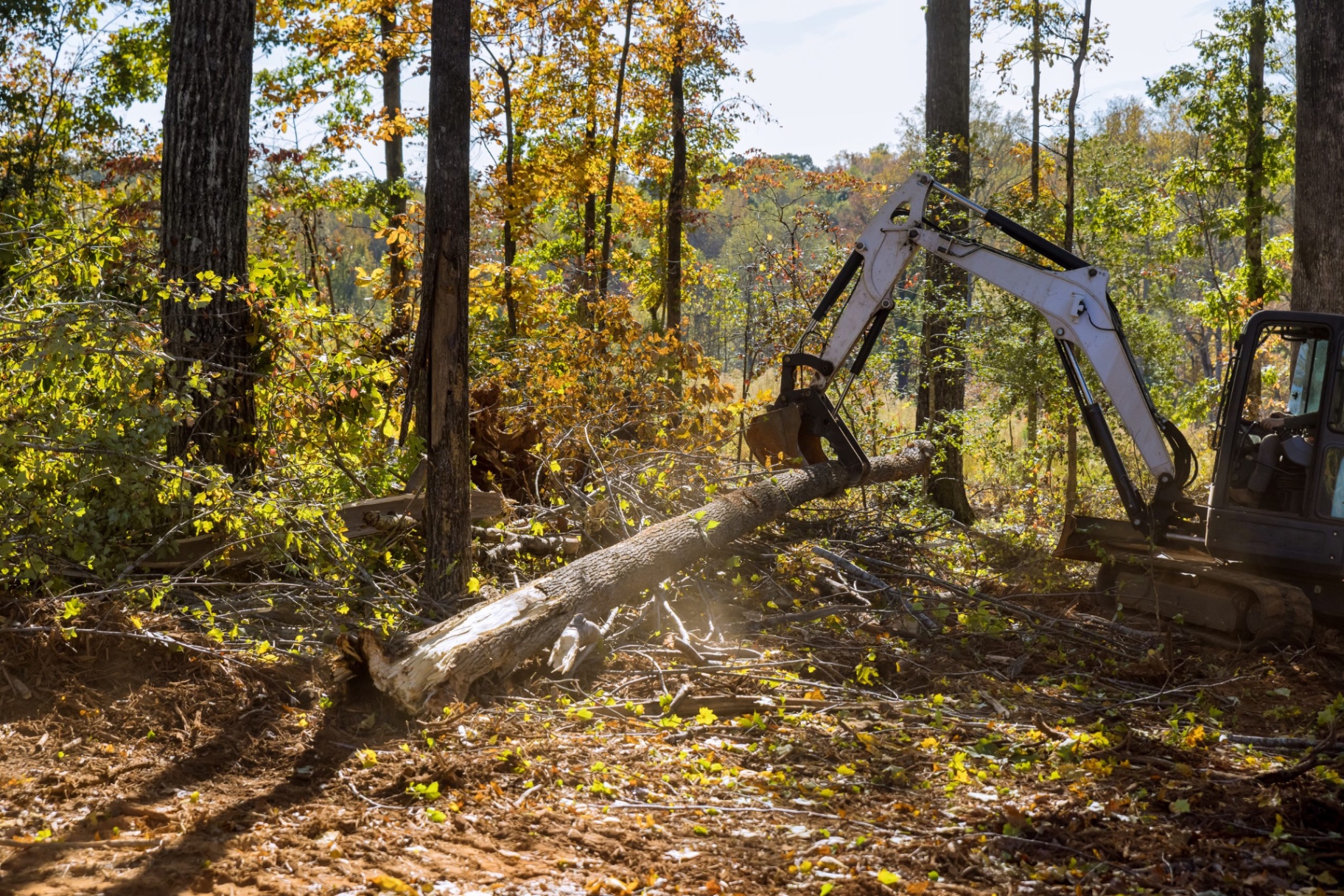
Trail cutting is clearing a defined path through woods or brush so people, ATVs, UTVs or small equipment can move through the property. On most residential and rural land it is done with a forestry mulcher, which grinds brush and small trees into a mulch layer on the trail surface in one pass.
Unlike full land clearing, trail cutting leaves the surrounding woods standing. You keep the shade, privacy and wildlife habitat and gain access. Stumps are ground near grade, so the trail is smooth enough to walk and ride without hauling debris away.
Which Trail Width Do You Need?
The right trail width depends on what will use it. Wider trails cost more per foot but dry out faster because more sunlight reaches the ground.
- Walking and hiking paths: about 4 to 6 feet wide, often the cheapest per foot.
- ATV trails: about 6 to 8 feet wide, enough room for a single machine and light turns.
- UTV and side by side trails: about 8 to 10 feet wide, with wider turns on corners.
- Property access and fire lanes: about 10 to 14 feet wide, good for a truck or tractor.
What Does Trail Cutting Cost per Foot?
Estimated 2026 trail cutting costs in the NC Piedmont typically fall between $1 and $5 per linear foot for mulched trails, and some jobs are priced by the hour or by the day instead. Per foot pricing makes it easy to compare a short walking loop to a long riding trail.
- Vegetation: briars and saplings cut faster than dense hardwood or thick privet.
- Tree size: trees over about 6 inches may need to be cut and handled separately.
- Terrain: steep slopes, rock and wet bottoms slow the machine.
- Width: a 10 foot trail clears about twice the area of a 5 foot trail.
- Mobilization distance from the KNS LandWorx yard in Rural Hall, NC.
Worked Example: A Half Mile ATV Loop Near King
Picture a 20 acre wooded property near King in Stokes County. The owner wants an 8 foot ATV loop about 2,600 feet long, through mixed pine and young hardwoods, with a short climb toward a ridge.
At an estimated $1.50 to $3.50 per foot for that growth and width, the trail typically lands around $3,900 to $9,100. That works out to roughly half an acre of mulching area, so per acre forestry mulching cost ranges are a good cross check. A few larger trees on the line, a wet crossing, or extra width on the turns can add to it. These are estimated ranges, not a quote. Your written proposal after a site walk is the only price that applies.
Where Do Trails Add the Most Value to Rural Land?
Trails add the most value when they connect the places you already use: the house, a barn or shop, a pond, a field edge, a hunting stand or a creek you like to walk to. A trail that links those points gets used every week, while a trail to nowhere tends to grow back in.
Trails also make the property easier to manage. A simple loop lets you check fence lines, spot fallen trees after storms, and get a UTV to the back of the land without crossing wet fields. On larger tracts, a wider access lane can double as a fire break and as a route for future firewood or timber work.
For many owners, a few well placed trails make wooded land feel usable for the first time. That is often the difference between acreage that just costs taxes and acreage the family actually enjoys, and it can help when the land is eventually sold, because buyers can walk the whole property easily.
How Should You Lay Out a Trail So It Lasts?
A trail lasts when water runs across it, not down it. In Piedmont red clay, a trail that runs straight down a slope becomes a gully within a season or two of riding.
- Follow the contour of the hill where you can, and climb gradually.
- Avoid long straight runs straight up and down steep slopes.
- Add gentle dips or water bars on slopes to turn water off the trail.
- Keep trails out of wet bottoms and away from creek banks where possible.
- Curve around large trees you want to keep instead of removing them.
- Flag the route and walk it before cutting, ideally in leaf off season.
Common Trail Cutting Mistakes to Avoid
Most trail problems are layout problems, not machine problems. They are cheap to avoid and expensive to fix later.
- Cutting straight up the fall line, which creates erosion and ruts.
- Making trails too narrow for the machine, so riders widen them by damaging trees.
- Routing through low spots that stay wet and turn to mud.
- Crossing creeks without checking stream buffer and permit rules first.
- Ignoring property lines and cutting onto a neighbor's land.
- Skipping maintenance, so trails close back in within two or three years.
How Do You Keep Trails Open?
Most mulched trails need light maintenance every one to three years to stay open. Regrowth from stumps and saplings at the edges is normal in the Piedmont.
A walk behind mower or a pass with a bush hogging setup on wider trails keeps them clear cheaply. Some owners schedule a quick mulching pass every couple of years along with other property work, which keeps costs low. If you also want hunting lanes or food plots, our hunting lane and food plot guide covers that work, and trails and lanes are often cut in the same visit.
How KNS LandWorx Cuts Trails
KNS LandWorx cuts walking, ATV, UTV and access trails for residential, rural residential, agricultural and recreational properties. We walk the route with you, suggest changes that limit erosion, and use forestry mulching so the surrounding woods stay standing.
We work from Rural Hall across Stokes, Surry, Forsyth, Yadkin, Rockingham, Guilford and nearby counties in North Carolina and Southern Virginia.
Frequently Asked Questions
How much does it cost to cut a trail through the woods?
Estimated 2026 trail cutting costs in NC typically run about $1 to $5 per linear foot for mulched trails, depending on width, vegetation and terrain. A written proposal after a site walk is the binding price.
How wide should an ATV trail be?
Most ATV trails are about 6 to 8 feet wide. UTV and side by side trails usually need 8 to 10 feet, with extra width on turns.
Is forestry mulching good for trail building?
Yes. A forestry mulcher clears brush and small trees in one pass, grinds stumps near grade, and leaves a mulch surface that limits erosion, all without hauling debris away.
When is the best time to cut trails?
Late fall through early spring is often best because leaves are down, the route is easier to see, and ticks and snakes are less active.
Do I need a permit to cut trails on my land in NC?
Most trail cutting on private land does not need a permit, but stream crossings, buffers and some watershed areas have rules. Check with your county before crossing creeks or working near water.
How often do trails need maintenance?
Most mulched trails need a light mowing or mulching pass every one to three years to stay open.
Turn your woods into trails you will actually use
Tell us how you want to use your trails, how long you want them, and roughly where they should go. KNS LandWorx will walk the route with you, suggest a layout that holds up to rain, and send a written trail cutting proposal.
Keep Reading
Land Clearing for a Perc Test in NC: How to Prepare Raw Land for a Septic Soil Evaluation
Bought wooded land and need a perc test? Here is how much clearing the soil evaluation actually needs, what it typically costs, and how to avoid paying to clear twice.
Read guide Land ClearingHow to Clear Overgrown Land in North Carolina: Methods, Costs and Upkeep
A lot or field left alone for five, ten or twenty years needs a plan, not just a mower. Here is how to pick the right clearing method and keep it from growing back.
Read guide DrainageFrench Drain Installation Cost in the NC Piedmont: A 2026 Homeowner Guide
Standing water, a soggy yard or a wet crawlspace? Here is how French drains are built in Piedmont red clay, what they typically cost, and when a different fix works better.
Read guideGet a Free Insights follow-up (Forestry Mulching) Quote
Step 1 of 2: tell us how to reach you and what service you need. We'll follow up with honest guidance and a written quote.
Ready to reclaim your property?
Free, no-pressure quotes across the NC Piedmont Triad. Call today.