
Land Clearing · Insights
How to Clear Overgrown Land in North Carolina: Methods, Costs and Upkeep
Clearing overgrown land in North Carolina starts with one question: how many years has the ground been left alone? Two or three years of growth can usually be bush hogged. Five to fifteen years of saplings, vines and briars is forestry mulching territory. Anything with real trees, stumps you plan to build over, or buried debris needs excavator clearing. Matching the method to the growth is what keeps the cost reasonable.
This guide is for homeowners, landowners and farm families from Lexington and Winston-Salem to Greensboro and High Point who have inherited, bought or simply lost track of a piece of ground. It covers how to size up the job, which method fits, honest cost ranges, safety issues, and how to keep the land open once it is cleared.
How Overgrown Is Your Land? A Quick Field Assessment
Overgrown land is any lot, field or yard where woody growth has taken over from grass. In the Piedmont, an open field left unmowed goes to broomsedge and briars within a couple of years, sweetgum, pine and privet saplings within five, and a young woodland within fifteen to twenty.
Walk the property and note a few things before calling anyone. They will shape the method and the price more than acreage does.
- Stem size: mostly under 2 inches, 2 to 6 inches, or larger trees.
- Density: can you walk through it, or is it a wall of privet and greenbrier?
- Vines: kudzu, honeysuckle and wild grape slow machines and regrow fast.
- Ground: flat or sloped, firm or wet, rocky or clean.
- Hidden debris: old fence wire, tires, appliances, concrete or farm equipment.
- Your goal: lawn, pasture, food plot, homesite or simply open and walkable.
Choosing the Right Method for Clearing Overgrown Land
The right clearing method is the cheapest one that gets you to your end goal. Here is how the three main options line up.
- Bush hogging: a rotary cutter on a tractor or skid steer that mows grass, weeds and small brush up to about 1 to 2 inches. Best for fields that are only a few years past their last mowing.
- Forestry mulching: a tracked machine with a toothed drum that grinds brush and trees up to about 6 inches into mulch in place. Best for 5 to 15 years of growth when you want to keep good trees and avoid hauling.
- Excavator or dozer clearing: pushes trees, pulls stumps and roots, and piles or hauls material. Best when the ground must be built on, graded, or turned into pasture with no stumps.
When Each Clearing Method Makes Sense
Bush hogging makes sense when you can still see grass under the growth. It is fast and inexpensive, but it will not handle thick saplings, and it leaves stems that can damage tires and hooves. Our bush hogging service is often the first step for pastures that have been let go for a season or two.
Forestry mulching makes sense for most overgrown lots and woods edges in the Piedmont. It clears in one pass, leaves a mulch layer that holds red clay in place, and lets you pick which trees stay. See our forestry mulching service for what the finished ground looks like. If kudzu or privet is the main problem, our winter invasive species removal guide explains why the mechanical reset needs a follow-up plan.
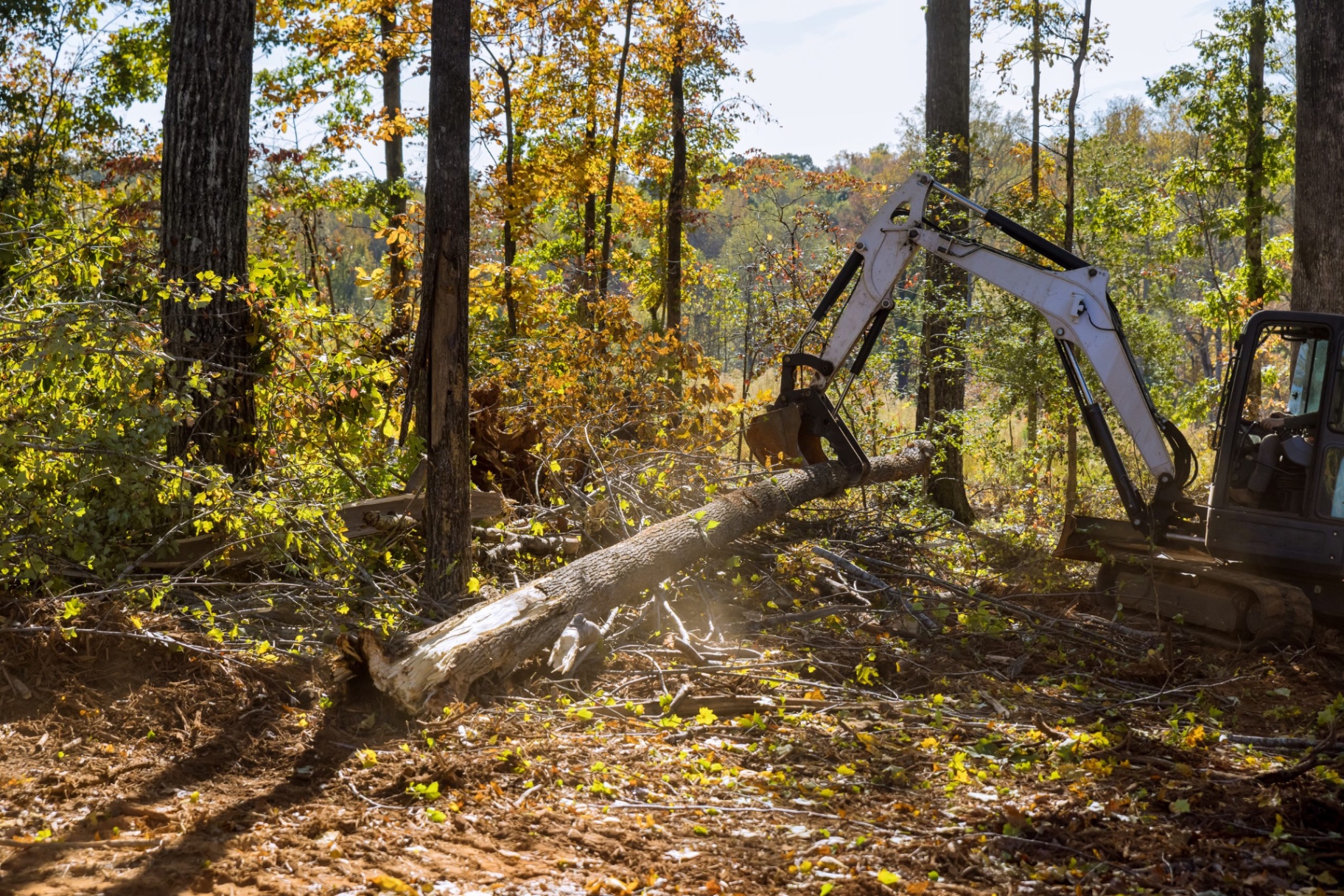
Excavator clearing makes sense when what happens next requires bare, stump-free soil, such as a homesite, driveway, garden or a pasture that will be harrowed and seeded. It costs more per acre, but it is the only method that removes roots. Our land clearing service covers this full-removal approach.
What Clearing Overgrown Land Typically Costs
Clearing overgrown land is usually priced per acre for larger areas and by the machine hour or by the job for small lots. These estimated ranges reflect what Piedmont landowners typically see in 2026.
These figures are typical estimated ranges for the NC Piedmont and Southern Virginia in 2026, not quotes. Every property is different, and the written proposal KNS LandWorx gives you after an on-site walk is the only price that applies to your job.
- Bush hogging light overgrowth: roughly $75 to $200 per acre on open ground, often with a job minimum.
- Forestry mulching medium overgrowth: roughly $1,500 to $3,500 per acre depending on density and slope.
- Excavator clearing with stump removal and haul-off: commonly $3,000 to $8,000 or more per acre.
- Small lots under half an acre: often priced by the job or by the hour at roughly $150 to $400 per machine hour.
- Debris and trash removal: priced separately once the material is found and measured.
- Mobilization: a trip charge is common and scales with distance from our Rural Hall, NC yard.
Worked Example: Two Overgrown Acres Near Lexington
Imagine a two-acre parcel outside Lexington in Davidson County that was an open field until about ten years ago. Today it is thick with sweetgum and pine saplings, privet along the old fence line, and a few mature oaks the owner wants to keep. The goal is an open, mowable area for a future garden and play space.
Bush hogging would bounce off the 3 to 5 inch saplings, and full excavator clearing would remove roots the owner does not need removed. Forestry mulching fits. At a mid-range estimate of around $2,500 per acre, the two acres would land near $5,000, plus mobilization, with the oaks left standing and a mulch layer protecting the clay. If an old trash pile turned up along the fence line, hauling it would be priced separately once it could be seen and measured.
Safety Issues Hidden in Overgrown Land
Overgrown land hides hazards that matter to anyone walking it before or after clearing. Ticks are the most common: brushy edges and tall grass are prime habitat, so wear long sleeves and treated clothing and check yourself afterward. Snakes, wasp nests and groundhog holes are also common in grown-up fields.
The bigger risk for machines is what is buried in the growth. Old barbed wire, T-posts, cinder blocks and farm scrap are found on a large share of rural Piedmont parcels. Tell your contractor about anything you know is out there, and walk the property together before work starts so obstacles can be flagged.
Common Mistakes When Clearing Overgrown Land
Most overspending on overgrown land comes from choosing the method before defining the goal.
- Paying for full stump removal on ground that only needs to be open and mowable.
- Bush hogging growth that is too thick, which leaves sharp stems and regrows fast.
- Clearing every tree, including healthy shade trees that add value.
- Leaving bare red clay on a slope with no mulch or seed, which washes into creeks.
- Skipping follow-up mowing, so the land is overgrown again in two or three years.
- Not asking whether hauling, trash removal and mobilization are in the price.
How to Keep Cleared Land From Growing Back
Cleared land in the Piedmont starts growing back the first spring, so the plan after clearing matters as much as the clearing itself. On mulched ground, most stumps and roots resprout; mowing or bush hogging once or twice a year for the first few years knocks that regrowth down until grass takes over.
If the goal is lawn or pasture, seed and lime soon after clearing so grass outcompetes saplings. For larger tracts, an annual or every-other-year bush hogging visit is usually the cheapest way to keep the land open. Planning that maintenance up front is how a one-time clearing turns into land you can actually use for years.
Frequently Asked Questions
What is the cheapest way to clear overgrown land?
For a few years of growth, bush hogging is usually the cheapest. For thicker saplings up to about 6 inches, forestry mulching is often cheaper than excavator clearing because nothing is hauled off.
How much does it cost to clear an acre of overgrown land in NC?
Estimated 2026 ranges run roughly $75 to $200 per acre for bush hogging, $1,500 to $3,500 per acre for forestry mulching, and $3,000 to $8,000 or more per acre for full excavator clearing. Your written proposal after a site visit is the binding price.
Can you clear overgrown land without removing stumps?
Yes. Forestry mulching grinds brush and small trees to ground level and leaves roots in place, which is ideal for lawns, trails, food plots and open space that will not be built on.
When is the best time of year to clear overgrown land?
Late fall through early spring is often best, because vegetation is dormant, visibility is better and ticks and snakes are less active. Mulching can be done year round in most conditions.
Will the land grow back after clearing?
Some regrowth is normal, especially from mulched stumps. Mowing or bush hogging once or twice a year for the first few years keeps it open until grass takes over.
Does KNS LandWorx clear overgrown land near Lexington and Greensboro?
Yes. KNS LandWorx is based in Rural Hall, NC and clears residential, rural residential and agricultural land across Davidson, Guilford, Forsyth and surrounding counties, including Lexington, Greensboro, High Point and Winston-Salem.
Get your land back without overpaying for it
Tell us how big the area is, roughly how long it has been left alone, and what you want to use it for. KNS LandWorx will walk it with you, recommend the lightest method that gets you there, and send a written clearing proposal.
Keep Reading
Trail Cutting Cost in NC: How to Build Walking, ATV and UTV Trails Through Your Woods
Want trails through your woods for walking, riding or checking the property? Here is how trails get cut, what they typically cost per foot, and how to make them last.
Read guide Land ClearingLand Clearing for a Perc Test in NC: How to Prepare Raw Land for a Septic Soil Evaluation
Bought wooded land and need a perc test? Here is how much clearing the soil evaluation actually needs, what it typically costs, and how to avoid paying to clear twice.
Read guide DrainageFrench Drain Installation Cost in the NC Piedmont: A 2026 Homeowner Guide
Standing water, a soggy yard or a wet crawlspace? Here is how French drains are built in Piedmont red clay, what they typically cost, and when a different fix works better.
Read guideGet a Free Insights follow-up (Land Clearing) Quote
Step 1 of 2: tell us how to reach you and what service you need. We'll follow up with honest guidance and a written quote.
Ready to reclaim your property?
Free, no-pressure quotes across the NC Piedmont Triad. Call today.