
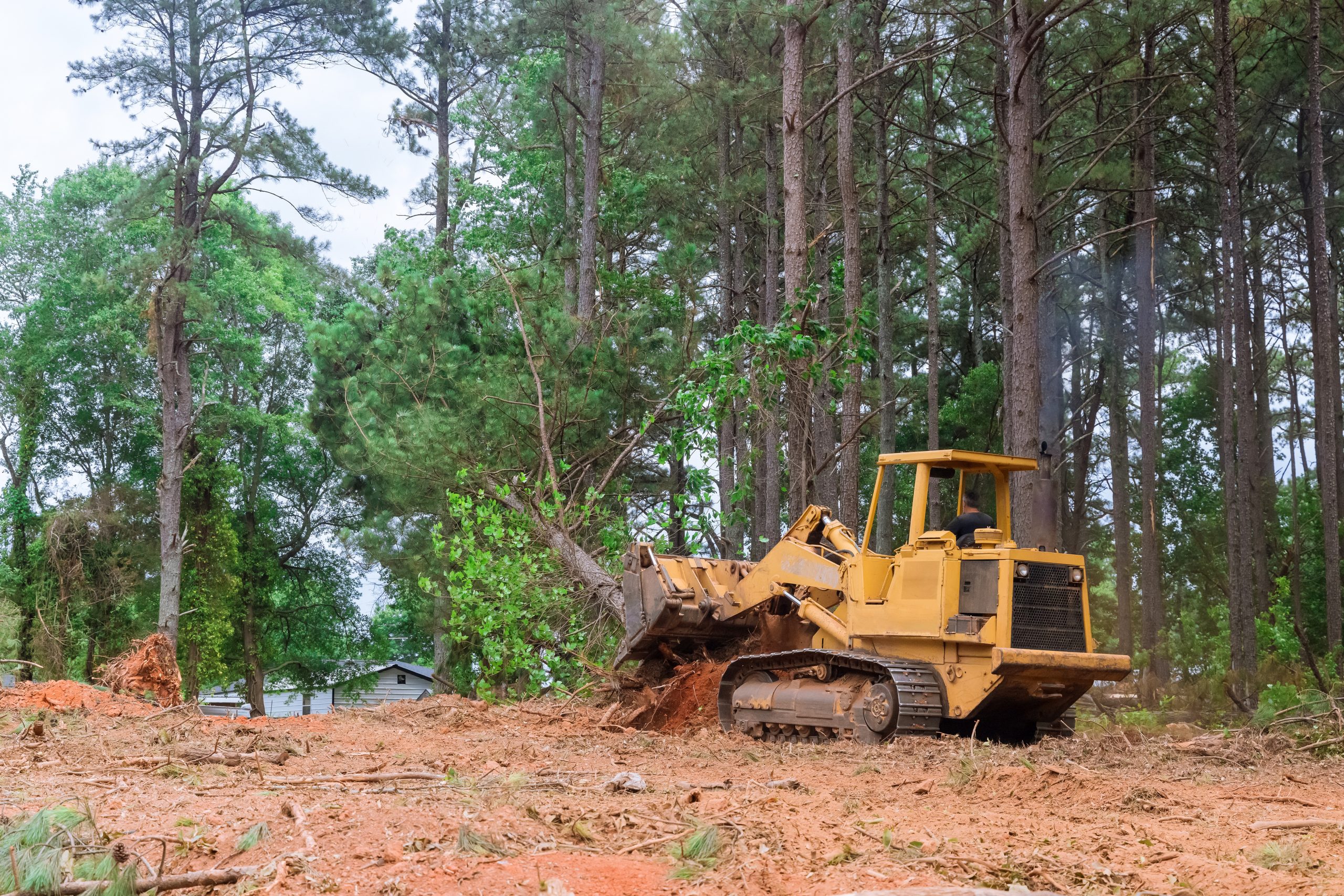
Invasive plant clearing
Winter Kudzu & Privet Removal
Clear the vines, expose the ground, and start a realistic control plan while growth is dormant and the property is easier to read.
Winter invasive species removal is the mechanical clearing of kudzu, privet, honeysuckle, multiflora rose, greenbrier, and other aggressive growth while leaves are down and the structure of the infestation is visible. It is often the best season to open access and remove heavy growth, but it is the beginning of control, not a promise that every root is dead.
Better visibility
Dormant growth reveals stems, crowns, fences, and keeper trees.
Selective access
Machines can work around mature trees, waterways, and property edges.
Mechanical reset
Mulching or cutting turns a wall of growth into reachable ground.
Follow-up plan
The next growing season shows where roots, crowns, and seedlings remain.
Timing
Why Winter Is the Best Clearing Window
Winter is a strong season for invasive plant clearing because dormant vegetation is easier to see through, map, and reach. Kudzu drops its leaves, native hardwoods are bare, and evergreen or semi-evergreen privet stands out against the woods. A property that looks like one solid green wall in July often reveals individual stems, old fence wire, drainage channels, and valuable trees once winter arrives.
Better visibility improves decisions. The crew can see where vines begin, which shrubs form the dense core, and where the infestation crosses a fence or creek. That matters because clearing every visible leaf is not the same as controlling the source. A winter walk lets KNS LandWorx separate areas that need a forestry mulcher from edges that need hand cutting, excavation, or protection.
Winter can also provide firmer ground between rain events, fewer active ticks and stinging insects, and less foliage wrapped around machinery. We still protect wet Piedmont clay. If the ground is saturated, waiting for a suitable window is better than trading an invasive plant problem for ruts and drainage damage.
Winter is not automatically the best season for every chemical treatment. Kudzu foliar treatments generally depend on active growth, while privet control methods can vary with stem size and site conditions. KNS LandWorx evaluates follow-up case by case and helps the property owner understand when a qualified applicator or Extension guidance belongs in the plan.
Identification
Know What Is Taking Over Before You Clear It
Invasive plant removal starts with identifying the growth pattern, not guessing from one leaf. The Piedmont and Southern Virginia support several aggressive vines and shrubs, and each responds differently after it is cut. These field clues help shape the equipment choice and the follow-up conversation.
- Kudzu forms a blanket over banks, fences, trees, and abandoned edges. In winter, look for rope-like vines, large crowns at the soil surface, and tangled runners that root where nodes touch ground. The visible vines die back, but established crowns store enough energy to resprout.
- Chinese privet grows as dense multi-stem shrubs or small trees. It often holds green leaves after native plants are bare, making winter one of the easiest times to map a stand. Cut stems commonly resprout, and birds can spread seed beyond the original patch.
- Japanese honeysuckle twists through shrubs, young trees, and fence lines. It can stay green well into winter and forms mats that shade the forest floor. Pulling vines from a live canopy can break limbs, so high growth may need staged cutting.
- Multiflora rose and greenbrier create thorny walls along fields, pastures, and woods. Both limit access, catch debris, and hide old wire. Their root systems and buried stems can produce new growth after the first pass.
Not every vine or shrub is invasive, and not every patch should be stripped. Native vegetation may stabilize a creek bank, screen a road, or provide useful wildlife cover. During the site walk, KNS LandWorx focuses on the owner’s goal and the growth that blocks it. That selective approach is the same principle used in our land clearing and brush removal service.
Methods
What Mechanical Clearing Does and Does Not Do
Mechanical clearing creates access, removes the heavy top growth, and exposes the ground for monitoring. A forestry mulcher can grind privet stems, vine masses, briars, and small volunteer trees into material that stays on site. Cutting and selective hand work reach fence corners, trunks, and sensitive edges. An excavator can push or pull larger root systems where the owner’s end use requires removal.
The immediate change can be dramatic. Trails reopen, property lines become visible, mature trees can be inspected, and ground that could not be crossed becomes usable. Mulched material also helps cover exposed Piedmont clay while the next step is planned. Visit our forestry mulching service page to see where that method fits.
What the machine cannot honestly promise is instant eradication. Kudzu can return from crowns and rooted nodes. Privet can sprout from cut stumps and roots. Seedlings can emerge after sunlight reaches the ground. Mulching a stem at ground level is not the same as killing every underground growing point.
That distinction protects your budget. If the goal is a walkable woodland, food plot edge, reopened fence, or accessible hunting tract, a selective mechanical reset may be exactly right. If the goal is a lawn, pasture, or planting bed with very low invasive pressure, the proposal should account for closer follow-up and possibly root removal in priority zones.
Long-term control
A Realistic Multi-Season Control Plan
Effective invasive plant control is a sequence, not a single machine visit. The exact steps vary, but a practical residential or rural plan usually follows four phases.
- 1
Map and prioritize
Walk the dormant property, mark boundaries, protect desirable trees, flag utilities and wire, and decide which areas must become usable first. Starting with the highest-value zone keeps the first phase focused.
- 2
Open the site
Mulch, cut, push, or haul the top growth according to density, slope, access, and the planned end use. Leave appropriate buffers along water and avoid unnecessary soil disturbance.
- 3
Inspect regrowth
Return attention to the site during the next growing season. Fresh shoots reveal surviving kudzu crowns, privet stumps, seedling flushes, and vines entering from an untreated edge.
- 4
Maintain the result
Use mowing, bush hogging, targeted reclearing, planting, or case-specific treatment guidance to keep new growth from rebuilding the canopy. Coordinate with neighboring owners when an infestation crosses the line.
Light regrowth on open ground may be manageable with scheduled bush hogging. Dense woody resprouts may need a targeted return visit. KNS LandWorx discusses those options case by case instead of selling one method as the answer for every plant and every property.
Site planning
Plan the Clearing Around How You Will Use the Land
The best clearing plan begins with the finished use. A homeowner reclaiming a wooded back yard needs clean sight lines and safe walking space. A farm owner may need a fence corridor reopened without damaging pasture. A hunting-property owner may want access and shooting lanes while retaining strategic cover. Those are different outcomes, even when the same privet or kudzu is present.
Access controls the machine choice. Gate width, overhead limbs, septic fields, slopes, creeks, wet pockets, and buried utilities can limit where full-size equipment belongs. Old farms and rural lots also hide barbed wire, T-posts, concrete, and dumped material under vines. Marking known hazards before work protects the property, crew, and equipment.
Debris handling matters too. Mulching in place usually costs less than trucking material away, reduces traffic across the yard, and leaves ground cover. Hauling can be appropriate where grading, seeding, fencing, or a clean bare area comes next. Large piles are not a finished plan, and burning may be restricted or poorly suited to the site.
Finally, protect soil and drainage. A thick invasive stand may be unattractive, but its roots and litter still cover the ground. Removing everything from a slope without mulch, seed, or another stabilization step can release red clay into a ditch or creek. KNS LandWorx plans the clearing and the surface left behind as one scope.
Our process
How KNS LandWorx Approaches Invasive Growth
Walk the whole problem
We review the visible infestation, nearby seed sources, access, drainage, hazards, and the trees or buffers you want to keep.
Define the finished use
We price toward a usable outcome such as an open woodland, fence corridor, field edge, trail network, pasture margin, or reclaimed yard.
Match equipment to the site
Forestry mulching, cutting, excavation, and hauling each solve different parts of the job. We use the lightest method that reaches the goal.
Set honest expectations
The proposal describes what gets cleared and where debris goes. We also explain likely regrowth and discuss follow-up options case by case.
KNS LandWorx is based in Rural Hall and serves the NC Piedmont and Southern Virginia. Browse our local service areas for town-specific details, or request a site walk when you are ready to turn a wall of growth into a workable property.
Avoidable problems
Common Invasive Plant Removal Mistakes
- Assuming one winter cut kills kudzu crowns or privet roots.
- Pulling heavy vines from live tree canopies and breaking sound limbs.
- Clearing every native shrub and young tree along with the invasive growth.
- Running heavy equipment on saturated clay and leaving ruts that collect water.
- Ignoring vines and seed sources across a shared fence or property line.
- Leaving bare slopes without mulch, seed, or another stabilization plan.
- Waiting until dense summer foliage hides wire, trash, and the true infestation boundary.
- Budgeting only for the initial clearing and not for the next growing season.
If your property is generally overgrown rather than dominated by one invasive plant, start with our property owner’s underbrush clearing guide. It compares the broader methods, timing, and maintenance options.
Further reading
Reliable Guidance for Long-Term Control
Invasive plant recommendations change by species, site, and intended land use. For identification and treatment guidance beyond mechanical clearing, use current Extension and natural-resource sources rather than social-media shortcuts.
- NC State Extension guidance on kudzu
- Cooperative Extension guidance on winter privet control
- Virginia Department of Conservation and Recreation invasive plant resources
- USDA Forest Service research and management resources
These resources support a basic truth: opening the property and controlling the plant are related but separate jobs. Mechanical clearing creates the access and visibility needed to make the next decision well.
Winter Invasive Species Removal FAQs
What is the best time of year to remove kudzu and privet?
Winter is an excellent time to map and mechanically clear kudzu and privet because leaves are down, access is better, and invasive evergreen foliage is easier to identify. Winter clearing is the first control step, not a guarantee that roots are dead. Follow-up timing depends on the plant, property, and control method.
Does cutting kudzu kill it?
No. Cutting or mulching removes the visible vines and opens the property, but established kudzu crowns and roots can send up new growth. Long-term control normally requires repeated monitoring and follow-up over several growing seasons.
Will forestry mulching kill privet roots?
Forestry mulching removes privet stems and makes dense ground accessible, but privet can resprout from stumps and roots. The cleared area needs to be checked during the next growing season, and follow-up options should be chosen for the intended use of the property.
Can KNS LandWorx guarantee complete eradication?
No responsible contractor should promise one-visit eradication of established kudzu or privet. KNS LandWorx provides the mechanical reset and discusses realistic follow-up options case by case. The goal is a usable property and a clear control plan, not an unsupported guarantee.
Can you save mature trees while removing invasive vines and shrubs?
Yes, when access and tree condition allow it. KNS LandWorx walks the site first, identifies trees and buffers to retain, and uses selective clearing around them. Vines growing high in a canopy may require staged cutting rather than pulling on live limbs.
What happens to the cleared material?
Material can often be mulched in place, piled, or hauled, depending on access and what you plan to do next. Mulching usually protects Piedmont clay and reduces hauling. Bare-ground goals, heavy trash, or grading may call for a different debris plan.
Do you clear invasive plants in Southern Virginia?
Yes. KNS LandWorx serves residential, rural residential, agricultural, and recreational properties across the NC Piedmont and Carroll, Patrick, and Henry counties in Southern Virginia.
How long does invasive plant control take?
Mechanical clearing can transform access in days, but control is usually a multi-season process. Kudzu and privet may resprout, seedlings can emerge, and vines can return from untreated edges. A practical plan includes the initial reset, growing-season inspection, and maintenance.
Start with an honest look at the whole infestation
Send a few photos and tell us what you want the property to become. KNS LandWorx will walk the site, explain what winter clearing can accomplish, and provide a written proposal with the debris and follow-up expectations spelled out.
Invasive Species Removal Across NC & Southern VA
KNS LandWorx clears kudzu, privet, invasive vines and heavy brush on residential, rural, agricultural and recreational land across the NC Piedmont and Southern Virginia.
- Rural Hall, NC
- Winston-Salem, NC
- Greensboro, NC
- High Point, NC
- Kernersville, NC
- Clemmons, NC
- Lewisville, NC
- Pfafftown, NC
- Tobaccoville, NC
- King, NC
- Walkertown, NC
- Mocksville, NC
- Mount Airy, NC
- Pilot Mountain, NC
- Yadkinville, NC
- Elkin, NC
- Jamestown, NC
- Thomasville, NC
- Lexington, NC
- Archdale, NC
- Asheboro, NC
- Summerfield, NC
- Oak Ridge, NC
- Stokesdale, NC
- Colfax, NC
- Madison, NC
- Mayodan, NC
- Reidsville, NC
- Burlington, NC
- Mebane, NC
- Hillsville, VA
- Galax, VA
- Fancy Gap, VA
- Cana, VA
- Stuart, VA
- Meadows of Dan, VA
- Ararat, VA
- Martinsville, VA
- Bassett, VA
- Collinsville, VA
- Ridgeway, VA
- Fieldale, VA
- Bethania, NC
- Stanleyville, NC
- Union Cross, NC
- Sedge Garden, NC
- Danbury, NC
- Walnut Cove, NC
- Pine Hall, NC
- Sandy Ridge, NC
- Dobson, NC
- Ararat, NC
- State Road, NC
- Lowgap, NC
- East Bend, NC
- Boonville, NC
- Jonesville, NC
- Advance, NC
- Bermuda Run, NC
- Cooleemee, NC
- Welcome, NC
- Midway, NC
- Wallburg, NC
- Denton, NC
- Randleman, NC
- Trinity, NC
- Franklinville, NC
- Eden, NC
- Stoneville, NC
- Wentworth, NC
- Ruffin, NC
- Pleasant Garden, NC
- Whitsett, NC
- Gibsonville, NC
- Sedalia, NC
- Graham, NC
- Elon, NC
- Haw River, NC
- Snow Camp, NC
- Woodlawn, VA
- Laurel Fork, VA
- Dugspur, VA
- Patrick Springs, VA
- Critz, VA
- Claudville, VA
- Spencer, VA
- Axton, VA
- Horsepasture, VA
Show Us What Has Taken Over
Tell us what is growing, how much ground it covers and what you want the property to become.