Land Management · Insights
The Property Owner's Guide to Underbrush Clearing in the NC Piedmont
Underbrush clearing is the selective removal of low-growing vegetation, briars, vines, saplings and small woody stems from a wooded property, while leaving established trees standing. It sits between doing nothing and full land clearing, and for most owners in the NC Piedmont and Southern Virginia, it is the right first move.
This guide walks through what underbrush actually is, why it gets out of hand, how professional crews clear it, what it costs, and how to keep a property from returning to a thicket. Everything here comes from work we run every week across Guilford, Forsyth, Alamance and the Carroll, Patrick and Henry county corridor.
What Counts As Underbrush
Underbrush is the tangled layer of growth under your tree canopy: greenbrier, honeysuckle, poison ivy, wild rose, blackberry canes, privet, autumn olive, sweetgum whips and hardwood saplings under about four inches in diameter.
Left alone, that layer thickens every year. In three to five seasons an open, walkable stand of hardwoods can turn into a wall of briars and stems that you cannot cross without a chainsaw. Underbrush clearing resets that layer without touching the trees you want to keep.
Why Property Owners Clear Underbrush
There are a handful of reasons this call comes in every week. Most owners want their land back for a specific use, and the thicket is in the way.
- Reclaiming usable acreage for kids, dogs, gardens or storage
- Improving sight lines and property value before a sale or appraisal
- Building deer stands, hunting pastures and shooting lanes
- Cutting walking trails, ATV loops and horse trails through wooded lots
- Fire risk reduction around structures, driveways and property lines
- Prepping for fence installation, survey work or new outbuildings
How Professional Crews Actually Clear Underbrush
Underbrush clearing is not one machine or one method. The right approach depends on the density of the growth, the terrain, and what the owner wants the finished property to look like.
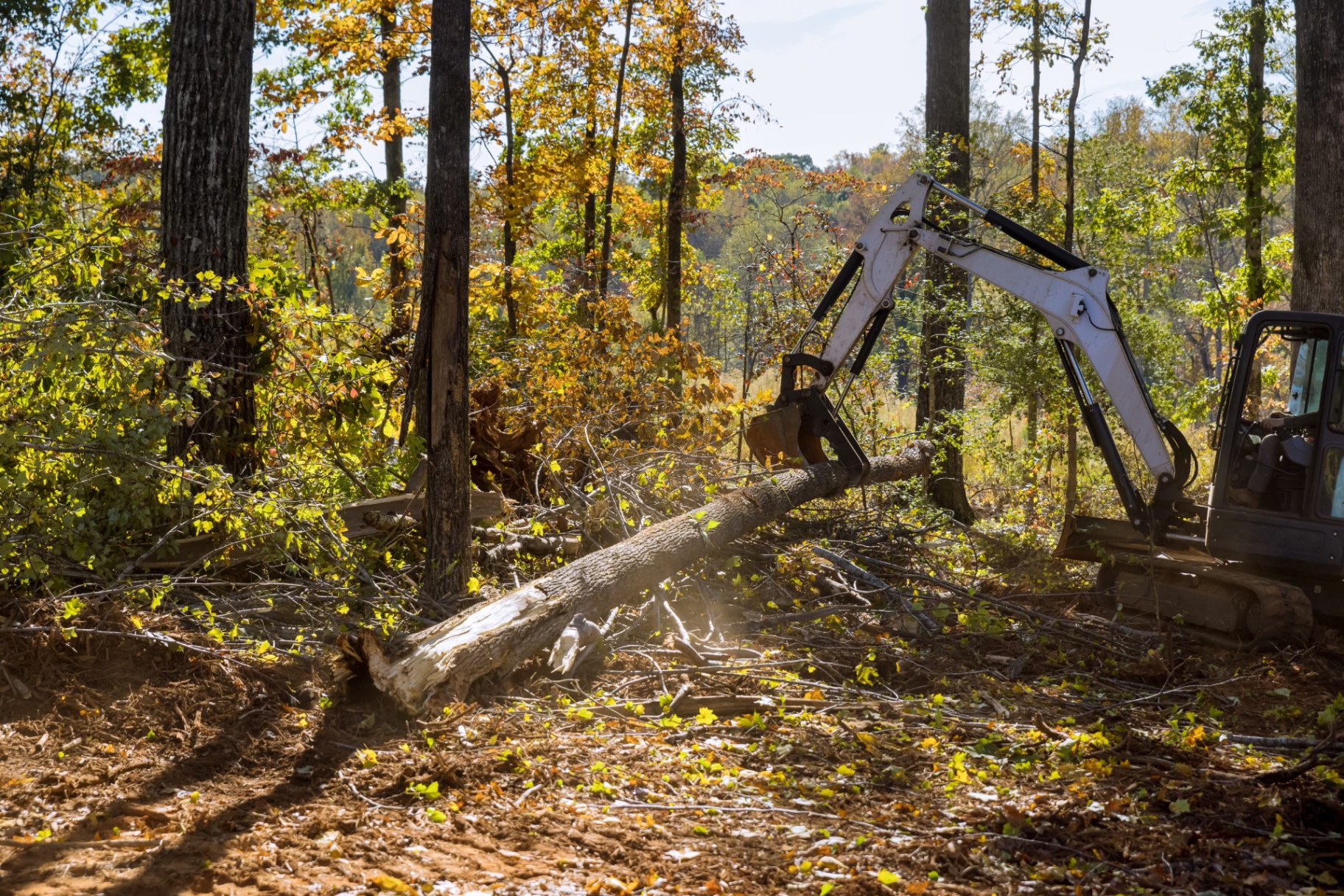
Forestry mulching is the workhorse for most Piedmont underbrush jobs. A tracked carrier with a rotary drum grinds standing brush, briars and saplings in place, leaving a mulch layer that suppresses regrowth. Nothing is hauled, nothing is burned, and mature trees stay untouched.
For lighter maintenance work on already-thinned property, a skid steer with a brush cutter or a bush hog behind a compact tractor is enough. For heavy vine loads climbing into the canopy, hand crews with chainsaws and loppers finish what the machines cannot safely reach.
What Underbrush Clearing Costs and How Long It Takes
Pricing is driven by density, terrain and access, not just acreage. A lightly wooded acre with easy access is a very different job from a briar-choked acre on a slope with a tight gate.
For most Piedmont properties, underbrush clearing runs roughly $1,500 to $3,500 per acre, with lighter stands trending lower and heavy vine-and-briar tracts trending higher. Production runs one to three acres per crew day on typical residential terrain.
The best window in North Carolina is late fall through early spring. Leaves are down, the ground is firmer, snakes and ticks are dormant, and crews can see what they are actually cutting. Summer work is doable but slower and harder on both the crew and the property.
Underbrush Clearing vs Full Land Clearing
Full land clearing removes everything: trees, stumps, root systems, topsoil disturbance and all. It is the right call when you are building a home, a shop or a pad and need a blank slate.
Underbrush clearing keeps your canopy. You end up with a park-like stand of mature trees over a clean, walkable forest floor. It costs a fraction of full clearing, disturbs almost no soil, and preserves the shade, wildlife value and mature timber you already have.
If you are not sure which one fits your goals, our team can walk the property and lay both options out on paper. Our forestry mulching vs land clearing guide covers the deeper comparison, and the land management services page details what a working underbrush job looks like on the ground.
Common Underbrush Clearing Mistakes to Avoid
The wrong approach can leave a property looking worse than when you started, or set you up for a heavier regrowth cycle inside two seasons.
- Hiring a bush hog operator for a job that actually needs a mulcher; the cutter jams on briars and leaves stobs behind
- Clear-cutting the canopy along with the underbrush and losing the shade that kept regrowth suppressed
- Skipping the maintenance pass; underbrush clearing is a reset, not a permanent fix
- Working on saturated ground and leaving rutting that turns into drainage problems
- Piling and burning debris on-site when local burn rules or HOA covenants forbid it
- Ignoring poison ivy and greenbrier removal on trails you actually plan to walk
Keeping the Property Clean After the Reset
Underbrush is opportunistic. As soon as sunlight hits the forest floor, dormant seed banks wake up and start pushing new growth. Without a maintenance plan, a cleared lot can look thick again inside three seasons.
The simplest schedule is a bush hog or light mulching pass every one to two years on the reclaimed areas, focused on trails, edges and the ground under the canopy. For working pastures and fence lines, an annual pass keeps woody encroachment from creeping back in.
How To Get an Underbrush Clearing Quote
A useful quote starts with a walk of the property, not a phone estimate. We look at density, terrain, access, drainage and what the owner wants the finished space to feel like, then price the work in writing.
If you are in Guilford, Forsyth, Davidson, Alamance, Stokes, Yadkin, Surry, Rockingham or the Carroll, Patrick and Henry county corridor of Southern Virginia, we can usually be on site inside a week. Start with a free written quote from our contact page, or browse the full list of areas we serve for local details.
Frequently Asked Questions
What is the difference between underbrush clearing and land clearing?
Underbrush clearing removes the low, tangled layer of briars, vines and saplings while leaving mature trees standing. Land clearing removes everything including trees, stumps and roots to create a blank slate for construction.
How much does underbrush clearing cost per acre in North Carolina?
For most Piedmont properties, underbrush clearing runs roughly $1,500 to $3,500 per acre. Density, terrain, access and vine load are the biggest drivers of price.
When is the best time of year to clear underbrush?
Late fall through early spring is ideal. Leaves are down, the ground is firmer, ticks and snakes are dormant, and crews can see what they are actually cutting.
Will underbrush grow back after clearing?
Yes. Underbrush clearing is a reset, not a permanent fix. A light maintenance pass every one to two years keeps briars, vines and saplings from filling back in.
Do you clear underbrush in Southern Virginia as well as North Carolina?
Yes. We run regular routes across Carroll, Patrick and Henry counties in Southern Virginia in addition to the NC Piedmont Triad and surrounding counties.
Ready to talk through your project?
We walk every property in person before quoting. Get a straight answer from a crew that runs this work every week.
Keep Reading
Land Grading and Yard Leveling Cost in the NC Piedmont
Grading quotes swing wildly because the word means five different jobs. Here is what land grading and yard leveling actually cost, and how to compare bids line by line.
Read guide ExcavationStump Grinding and Stump Removal Cost in the NC Piedmont
Per stump, per hour or per acre? Here is how stump grinding and full root removal are priced in the NC Piedmont, and what makes one quote double another.
Read guide Land ManagementPasture Clearing and Reclamation Cost in North Carolina and Southern Virginia
Grown-up pasture comes back in stages, not one pass. Here is the full reclamation sequence and what each step costs, from first mulching pass to first grazing season.
Read guideGet a Free Insights follow-up (Land Management) Quote
Step 1 of 2: tell us how to reach you and what service you need. We'll follow up with honest guidance and a written quote.
Ready to reclaim your property?
Free, no-pressure quotes across the NC Piedmont Triad. Call today.