
Land Management · Insights
Bush Hogging Cost Per Acre in North Carolina: 2026 Estimated Ranges
Bush hogging cost per acre in North Carolina depends mostly on one thing: how long the field has gone without being mowed. A pasture on a regular schedule can be cut for a modest per-acre price, while a field left alone for several years with saplings coming up can cost several times more, or need a forestry mulcher instead.
This guide covers the estimated 2026 ranges we see for bush hogging in High Point, Greensboro and the rest of the NC Piedmont, the factors that move the price, a worked example, and how to set a mowing schedule that keeps your cost per acre low. Treat every number here as a planning range, not a quote.
What Bush Hogging Is and When You Need It
Bush hogging is heavy-duty rotary mowing with a tractor or tracked machine that cuts tall grass, weeds, briars and small woody growth, typically up to about one to two inches thick. It is the standard way to keep pastures, hay fields, hunting fields, rural lots and fence lines open.
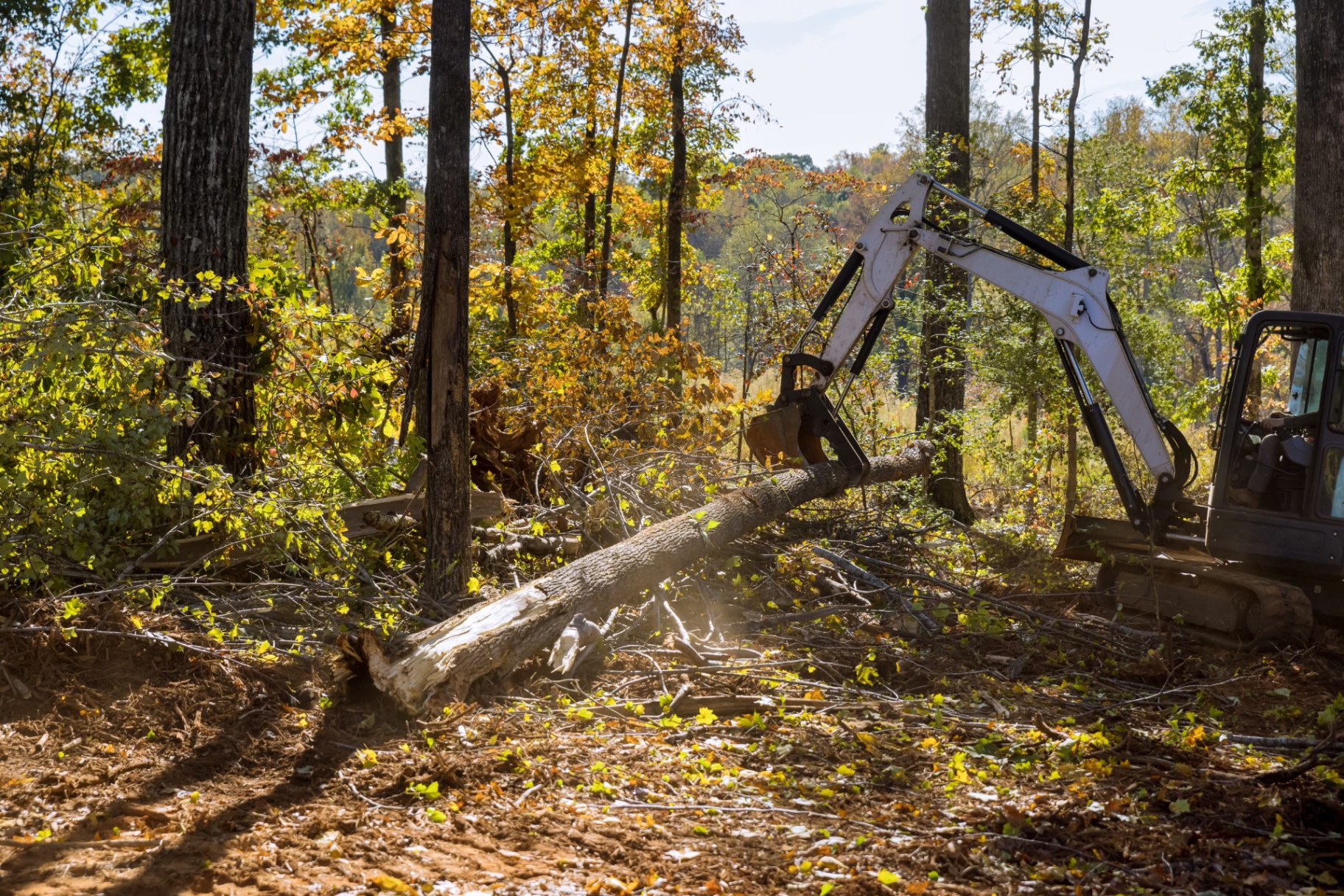
It is not the right tool for everything. Once saplings pass a couple of inches thick, a rotary cutter struggles and leaves ragged stubs. At that point forestry mulching is usually more efficient. Our bush hogging service page explains where each method fits.
Estimated Bush Hogging Cost Per Acre in 2026
Bush hogging is most often priced per acre on open fields, and by the hour on small, irregular or obstacle-heavy areas. These ranges reflect typical 2026 pricing across the NC Piedmont.
These figures are typical estimated ranges for the NC Piedmont and Southern Virginia in 2026, not quotes. Every property is different, and the written proposal KNS LandWorx gives you after an on-site walk is the only price that applies to your job.
- Routine maintenance on a field mowed every year: often roughly $60 to $150 per acre.
- Overgrown field, two to three seasons without mowing: often roughly $150 to $400 per acre.
- Heavy growth with saplings approaching two inches or more: can run roughly $400 to $900 per acre, and forestry mulching may be the better choice.
- Hourly work on small or broken-up areas: commonly $100 to $250 per hour depending on the equipment.
- Minimum job charge and mobilization: most contractors set a minimum, and trip charges scale with distance from our Rural Hall, NC yard.
What Raises or Lowers the Price Per Acre
The main price driver is the time a machine spends per acre. Anything that slows the tractor down raises the cost.
- Growth height and thickness: waist-high grass cuts fast; thick briars and woody stems do not.
- Terrain: flat, open fields are cheapest. Slopes, gullies, wet spots and terraces slow the work.
- Obstacles: rocks, stumps, old wire, trash and hidden holes force slower passes and can damage equipment.
- Acreage: larger fields usually carry a lower per-acre price because setup time is spread out.
- Access: a wide gate and a firm path to the field make everything faster.
- Timing: mowing before growth gets woody is always cheaper than mowing after.
Worked Example: Ten Acres of Pasture Near High Point
Consider a ten-acre pasture outside High Point that was mowed regularly until the owner fell behind for three seasons. It now has waist-high fescue, blackberry patches along the edges and scattered sweetgum sprouts about an inch thick.
The first pass would likely fall in the overgrown range, perhaps roughly $1,500 to $3,500 for the whole field plus a trip charge, depending on how thick the edges are and whether any areas are wet. The fence line might need extra handwork or a mulcher, priced separately; see our fence line clearing cost guide for how that is scoped.
Once the field is back on an annual or twice-yearly schedule, the same ten acres would typically return to the maintenance range, which is where the real savings are.
Setting a Bush Hogging Schedule That Keeps Cost Down
The cheapest bush hogging is the kind done on schedule. In the NC Piedmont, most pastures and open fields do well with one to two passes a year.
- Late spring to early summer: knocks back weeds before they seed.
- Late summer to early fall: keeps saplings from getting woody before winter.
- Hunting fields: time passes around food plot planting and the season, avoiding nesting periods where wildlife is a priority.
- Wildlife and pollinator areas: rotating sections every other year leaves cover while keeping woody growth in check.
When Bush Hogging Is Not Enough
If a field has gone five or more years without mowing, it has usually become young forest. Running a bush hog over it wastes time and leaves sharp stubs that puncture tires and hooves.
In that case a single forestry mulching pass resets the field, and bush hogging keeps it open afterward. For a full breakdown, read our comparison of forestry mulching vs bush hogging.
Bush Hogging Wet Ground and Steep Slopes
Two conditions change a routine mowing job into a careful one: soft ground and slope. The NC Piedmont holds water in low spots and along creek bottoms well into spring, and running a heavy tractor and cutter over saturated ground leaves ruts that hold more water and get worse every pass. On genuinely wet acres the right move is often to wait for a dry stretch, mow the high ground first, or use a lighter machine, even if that shifts the schedule a few weeks.
Slopes carry a different risk. Most farm-style bush hogs are safe on gentle to moderate grades, but steep banks, pond dams and ditch edges call for a different approach: a smaller machine, a flail or boom mower, or a mulcher on tracks. A contractor who quotes steep or wet ground sight unseen, at the same per-acre rate as flat dry pasture, is guessing. Expect those areas to be walked, priced separately, or scheduled for the right season, and treat that as a sign of a careful operator rather than an upsell.
Common Bush Hogging Mistakes
Most overspending on bush hogging comes from waiting too long or not preparing the field.
- Skipping a year, which can double or triple the next cut.
- Not flagging stumps, rocks, wells and wire before mowing.
- Mowing wet fields and leaving deep ruts.
- Using a bush hog on growth that needs a mulcher.
- Choosing a contractor who will not walk the field first.
Frequently Asked Questions
How much does bush hogging cost per acre in NC?
Estimated 2026 ranges run roughly $60 to $150 per acre for routine maintenance and $150 to $400 per acre for overgrown fields, with heavy growth higher. Your written proposal is the only binding price.
Is bush hogging priced per acre or per hour?
Open fields are usually priced per acre. Small, irregular or obstacle-heavy areas are often priced by the hour, usually with a minimum job charge.
How often should I bush hog my pasture?
Most Piedmont pastures need one to two passes a year, typically late spring and late summer, to keep weeds and woody sprouts in check.
What size brush can a bush hog cut?
Most rotary cutters handle grass, weeds and woody stems up to about one to two inches thick. Thicker saplings are better handled by forestry mulching.
Do you bush hog in Greensboro and High Point?
Yes. KNS LandWorx serves Greensboro, High Point and surrounding Guilford, Forsyth and Davidson County communities from Rural Hall, NC.
Can you set up a recurring mowing schedule?
Yes. Many pasture and hunting land owners book an annual or twice-yearly pass, which keeps the per-acre cost in the maintenance range.
Get your field back on a schedule
Tell us the acreage, how long since the last cut and what the land is used for. KNS LandWorx will walk the field, tell you whether a bush hog or a mulcher is the right tool, and give you a written proposal plus a mowing schedule to keep future passes affordable.
Keep Reading
Building Pad Grading Cost for Homes, Shops and Barns in North Carolina
Planning a house, shop or barn? Here is how building pad grading is priced in NC, with estimated ranges, a worked example and the mistakes that cause settling.
Read guide Land ManagementHow Brush Clearing Helps Reduce Ticks Around Your NC Home and Pasture
Ticks thrive in brushy edges and tall grass. Learn how targeted clearing and mowing shrink tick habitat around your home, kids, pets and livestock.
Read guide Land ClearingBrush Removal Cost in Greensboro, NC: What Drives the Price in 2026
Overgrown back lot, fence line or wooded edge? Here is how brush removal is actually priced in Greensboro, with honest ranges and the factors that change them.
Read guideGet a Free Insights follow-up (Land Management) Quote
Step 1 of 2: tell us how to reach you and what service you need. We'll follow up with honest guidance and a written quote.
Ready to reclaim your property?
Free, no-pressure quotes across the NC Piedmont Triad. Call today.