
Site Preparation · Insights
Preparing a Rural Homesite for Build-Ready Excavation in Forsyth County
Building on rural Forsyth County land is one of the best decisions an owner can make, and one of the easiest ways to burn six figures on avoidable delays. The difference is almost always in how the site was prepped before the builder ever pulled up.
This is the sequence we use on rural homesites across Rural Hall, King, Tobaccoville, Pfafftown and greater Forsyth. Follow it in order and the build starts on a build-ready lot, not a construction site fighting its own dirt.
Step 1: Walk the Land With a Real Purpose
Before a single tree comes down, walk the property with the house plan in hand and think about four things: where the house sits, where water goes, where the septic goes and where the driveway comes in. If any one of those is wrong, everything downstream is more expensive.
On rural Forsyth County parcels, the highest, driest, most level buildable area is rarely the most obvious one. It usually takes a walk with someone who has cut pads on similar terrain to see it.
Step 2: Cut the Driveway and Access First
Access comes before anything else. If a concrete truck cannot get to the pad, the pad does not matter. Cutting a proper driveway with the right base, crown and drainage is the first excavation move on every rural build we prep.
Get the driveway right early and every subsequent trade benefits: septic installers, concrete, framing, roofers and utility crews. Get it wrong and you rebuild it after every wet week.
Step 3: Selective Clearing, Not Full Stripping
The temptation is to clear everything. Do not. Full stripping on Piedmont clay strips protection and invites erosion, and you cannot put mature trees back.
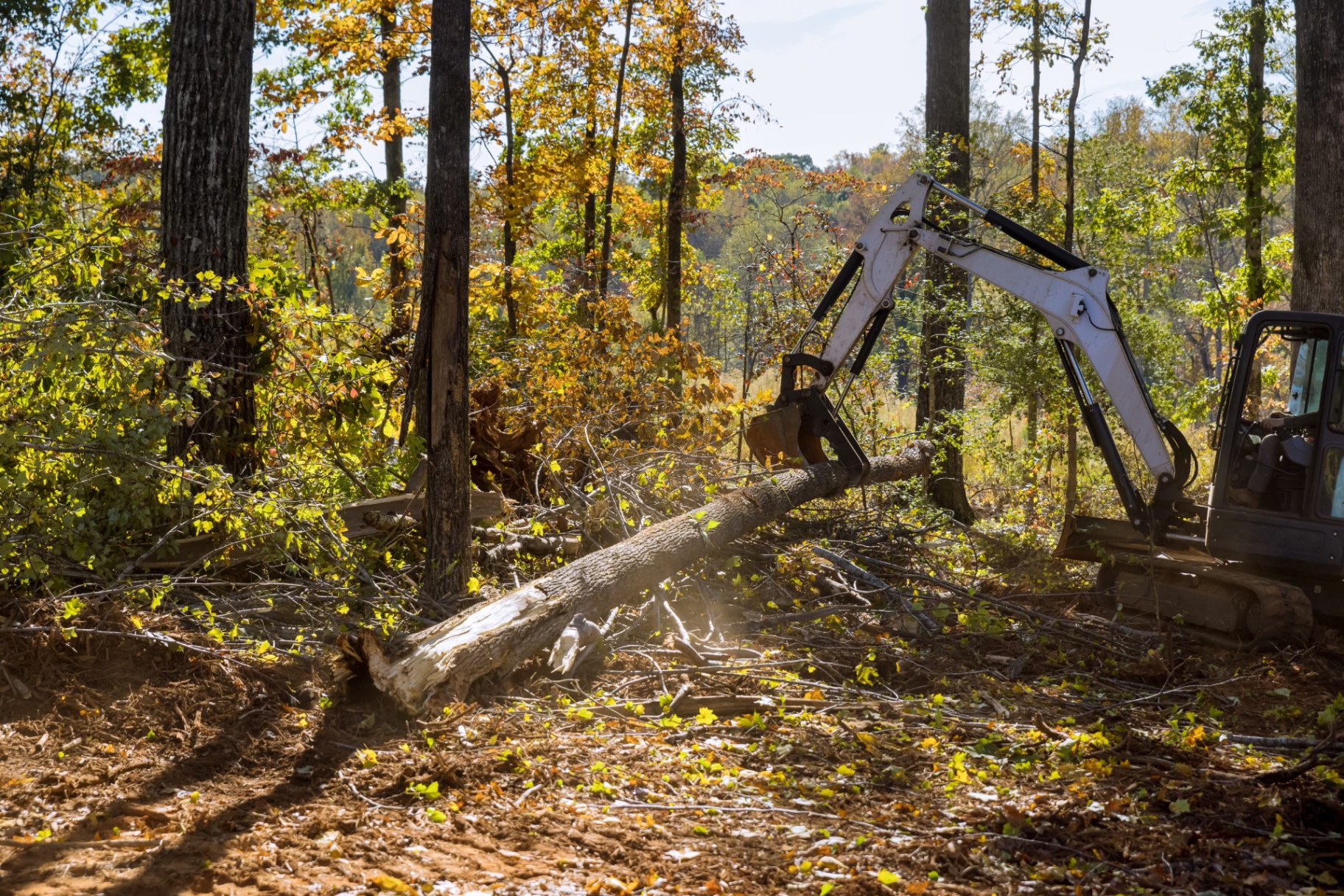
Clear the actual footprint of the house, driveway, septic field and any pad extensions, plus a working perimeter. Leave the rest. On rural residential lots, mature trees add real property value and cut long-term maintenance.
Step 4: Cut and Compact a Real Pad
A house pad is not a bulldozed spot. It is a cut, filled, compacted and shaped surface with positive drainage in every direction, built to the elevation and dimensions on the plan.
On clay, that means removing topsoil in the pad footprint, cutting to grade, bringing in select fill where needed and compacting in lifts. A pad that is not compacted properly will settle under the foundation and no amount of framing will fix that later.
Step 5: Plan Drainage Before You Backfill
The moment the pad is cut is the moment to plan foundation drainage. Perimeter drains, positive grade away from the house, and daylight discharge for downspouts are all cheaper to install now than to add after the slab is poured.
Skip this and Piedmont red clay will find every gap. We have re-done drainage on plenty of two-year-old builds where the owner saved a few thousand at framing time and paid ten times that later.
Step 6: Coordinate Septic and Utilities
In rural Forsyth County, septic drives site layout more than owners expect. The perc test dictates where the field can go, which in turn dictates where the house sits. Do the perc before finalizing the house location, not after.
Utilities (power drop, water line, propane if applicable) get staged next. A good site prep leaves clean stubs and clear paths for each utility so the trades do not spend a day re-digging what was already covered.
- Perc test result confirmed and mapped
- Well or water tap location staged
- Power drop path cleared and marked
- Septic field footprint protected from equipment traffic
- Erosion control installed and inspected
Step 7: Hand Off a Truly Build-Ready Lot
A build-ready lot means the builder shows up to a driveway that supports concrete trucks, a compacted pad at the right elevation, working drainage, a clear utility corridor and erosion control in place.
That handoff is what protects the schedule and the budget once framing starts. It also tells the builder they are working with an owner who takes the property seriously, which changes the tone of the entire project.
Frequently Asked Questions
How long does full rural site prep take in Forsyth County?
Typical projects run two to four weeks depending on acreage, access, weather and how much clearing is involved. Complex sites with significant grading run longer.
Should I clear before or after the perc test?
Clear only what the septic evaluator needs to walk. Leave the rest until the perc dictates the site layout, so you do not clear where you are not going to build.
Can KNS LandWorx handle the septic install itself?
We coordinate closely with licensed septic installers and prep the site so their install goes cleanly. We do not pull the septic permit ourselves.
Ready to talk through your project?
We walk every property in person before quoting. Get a straight answer from a crew that runs this work every week.
Keep Reading
Land Grading and Yard Leveling Cost in the NC Piedmont
Grading quotes swing wildly because the word means five different jobs. Here is what land grading and yard leveling actually cost, and how to compare bids line by line.
Read guide ExcavationStump Grinding and Stump Removal Cost in the NC Piedmont
Per stump, per hour or per acre? Here is how stump grinding and full root removal are priced in the NC Piedmont, and what makes one quote double another.
Read guide Land ManagementPasture Clearing and Reclamation Cost in North Carolina and Southern Virginia
Grown-up pasture comes back in stages, not one pass. Here is the full reclamation sequence and what each step costs, from first mulching pass to first grazing season.
Read guideGet a Free Insights follow-up (Site Preparation) Quote
Step 1 of 2: tell us how to reach you and what service you need. We'll follow up with honest guidance and a written quote.
Ready to reclaim your property?
Free, no-pressure quotes across the NC Piedmont Triad. Call today.