
Land Management · Insights
Bush Hogging vs Forestry Mulching for NC Pastures & Hunting Tracts
Landowners across the Piedmont and foothills ask us the same question every spring: should I bush hog this or should I mulch it? The tools look similar from the seat of a truck, but they do very different work, and using the wrong one is a fast way to spend money without changing the ground.
Here is the plain-English framework we use on pasture, hayfield, hunting tract and rural residential land across Stokes, Yadkin, Surry, Forsyth and surrounding counties.
What Each Machine Actually Does
A rotary cutter (bush hog) drags a heavy horizontal blade behind a tractor. It knocks down grass, weeds and light brush up to a couple inches thick. It is fast, cheap per acre and ideal for maintenance mowing.
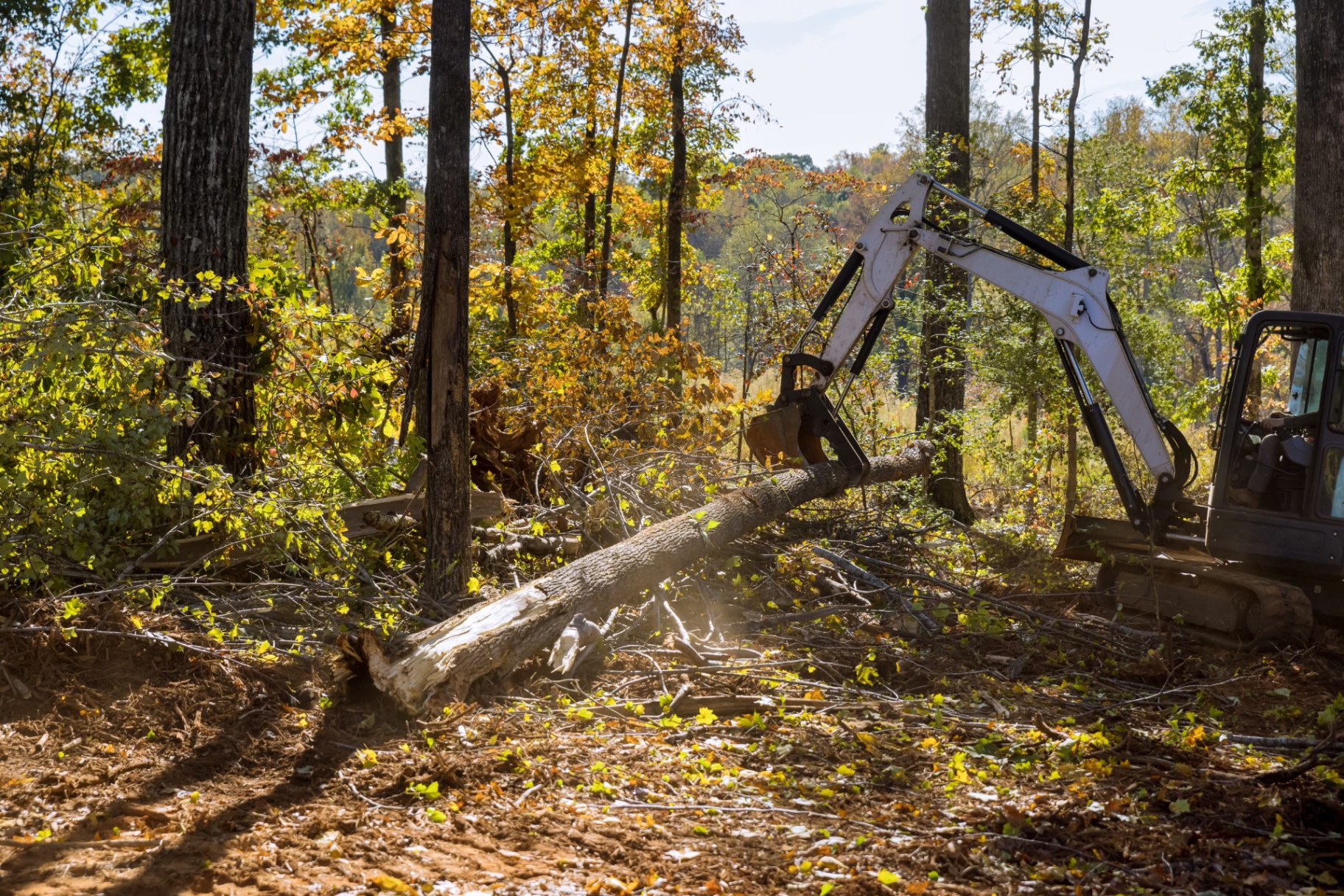
A forestry mulcher runs a rotary drum with steel teeth on the front of a tracked carrier. It grinds standing brush, saplings and small trees down to a mulch layer. It is slower per acre and more expensive by the hour, but it resets ground that a bush hog cannot touch.
When Bush Hogging Is the Right Tool
Bush hogging is the right call for maintained pasture, hayfield keep-up, road frontage, food plots that see annual cutting, and any grassland where the goal is to knock the growth back and keep it that way.
On land that has been mowed within the last year or two, a rotary cutter is almost always the correct answer. It is fast, low-impact and the price per acre stays low as long as the ground is still open.
- Pasture and hayfield annual maintenance
- Fence line and road frontage keep-up
- Firebreaks and edge management
- Established food plots and shooting lanes
- Any grassland that has not gone to brush
When Forestry Mulching Is the Right Tool
Mulching is the right call any time a bush hog cannot cut it. That means anything above roughly 2 to 3 inch stems, dense brush, briar thickets, sapling stands, or old pasture that has been let go for 5 or more years.
It is also the right call for hunting tract work where you want to reset the ground, cut travel corridors, open bedding edges or restore old food plots that have grown into brush. A bush hog will bounce off that stuff; a mulcher grinds through it.
Cost and Speed Comparison
Bush hogging is far cheaper per acre and moves multiple acres per hour on open ground. It is the volume tool.
Forestry mulching is priced by the hour or per acre and moves slower because it is doing more work. On a per-acre basis it costs more, but if you are looking at land a bush hog physically cannot cut, comparing the two on price is comparing the wrong things.
Managing Hunting Tracts in the Piedmont and Foothills
Good hunting property is a managed ecosystem. Mulching opens travel and bedding, creates edge, and puts sunlight back on the ground so browse regenerates. Bush hogging keeps food plots, shooting lanes and access roads clean once they are established.
The pattern we run for most Stokes, Surry and Yadkin County hunting tracts is one mulching pass every 4 to 7 years to reset ground, with bush hogging in between to keep it usable. That combination is far cheaper long-term than letting land grow out and needing full clearing later.
Restoring Old Pasture That Has Grown Up
Pasture that has been let go for a decade or more usually cannot come back with a bush hog alone. Cedar, sweetgum, autumn olive and other pioneer species take over fast, and once they are past thumb thickness, a rotary cutter cannot touch them.
The right sequence is: mulch the whole footprint, follow up with a bush hog pass 6 to 12 months later once regrowth is soft, and reseed as needed. Skip step one and step two never works.
Common Mistakes Landowners Make
The biggest one is hiring a bush hog for a mulching job. The cutter breaks blades, tears up the field, and the owner ends up paying for a mulcher anyway.
The other common miss is skipping regular maintenance after a mulching reset. Mulching is not a one-time fix; it is a reset. Follow it with annual or every-other-year bush hogging and the ground stays usable for a decade. Skip the maintenance and the reset was wasted.
Frequently Asked Questions
How often should I bush hog a pasture in NC?
Most Piedmont and foothill pastures do well with one or two cuts per year, depending on growth and grazing pressure.
Can I mulch and then bush hog the same year?
Yes, and on old pasture that is usually the right sequence: mulch first, then a bush hog pass on the softer regrowth several months later.
Do you travel to Stokes, Yadkin and Surry County for this work?
Yes. Those counties are core to our service area from our Rural Hall shop, and we run mulching and bush hogging routes there regularly.
Ready to talk through your project?
We walk every property in person before quoting. Get a straight answer from a crew that runs this work every week.
Keep Reading
Land Grading and Yard Leveling Cost in the NC Piedmont
Grading quotes swing wildly because the word means five different jobs. Here is what land grading and yard leveling actually cost, and how to compare bids line by line.
Read guide ExcavationStump Grinding and Stump Removal Cost in the NC Piedmont
Per stump, per hour or per acre? Here is how stump grinding and full root removal are priced in the NC Piedmont, and what makes one quote double another.
Read guide Land ManagementPasture Clearing and Reclamation Cost in North Carolina and Southern Virginia
Grown-up pasture comes back in stages, not one pass. Here is the full reclamation sequence and what each step costs, from first mulching pass to first grazing season.
Read guideGet a Free Insights follow-up (Land Management) Quote
Step 1 of 2: tell us how to reach you and what service you need. We'll follow up with honest guidance and a written quote.
Ready to reclaim your property?
Free, no-pressure quotes across the NC Piedmont Triad. Call today.